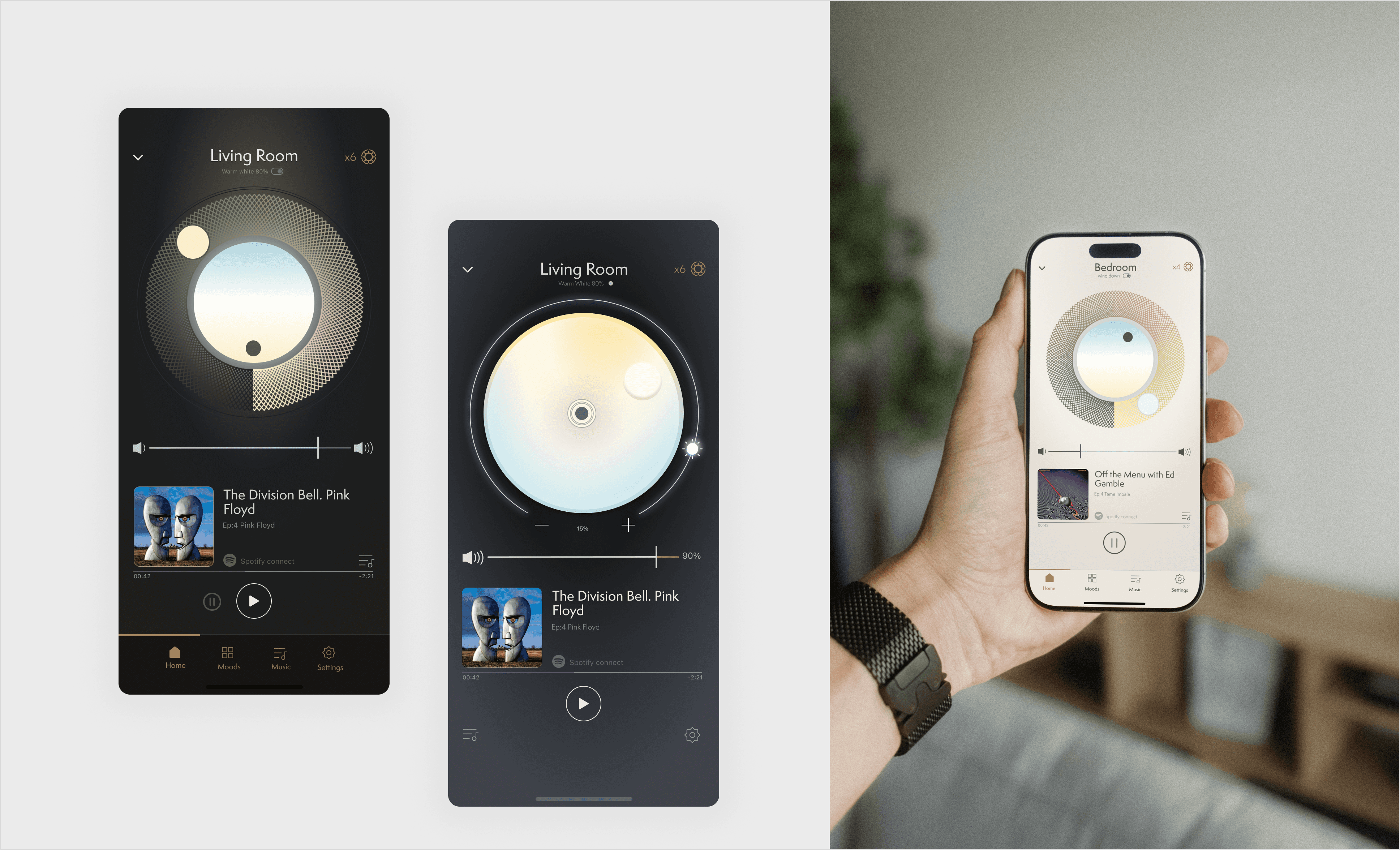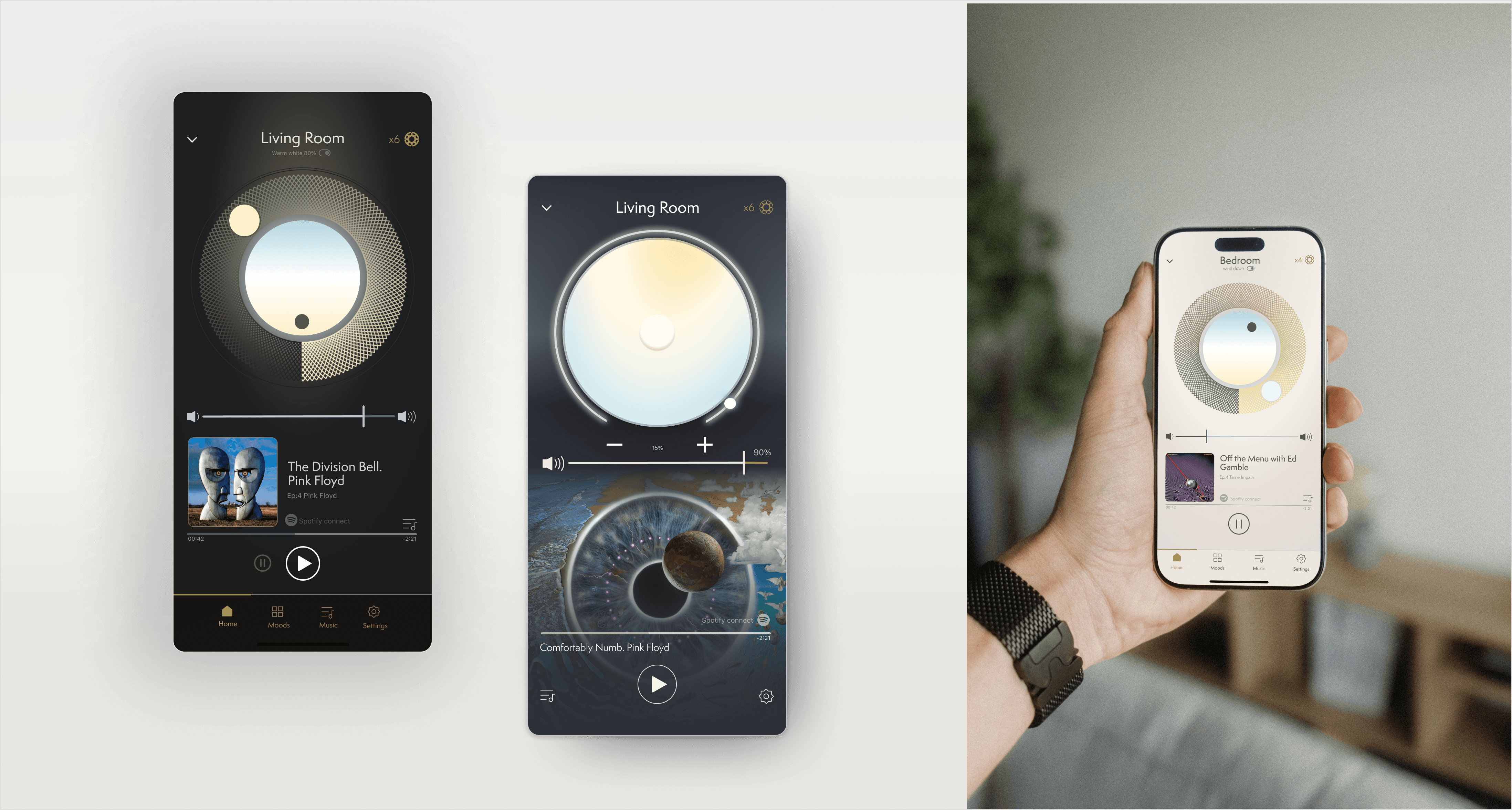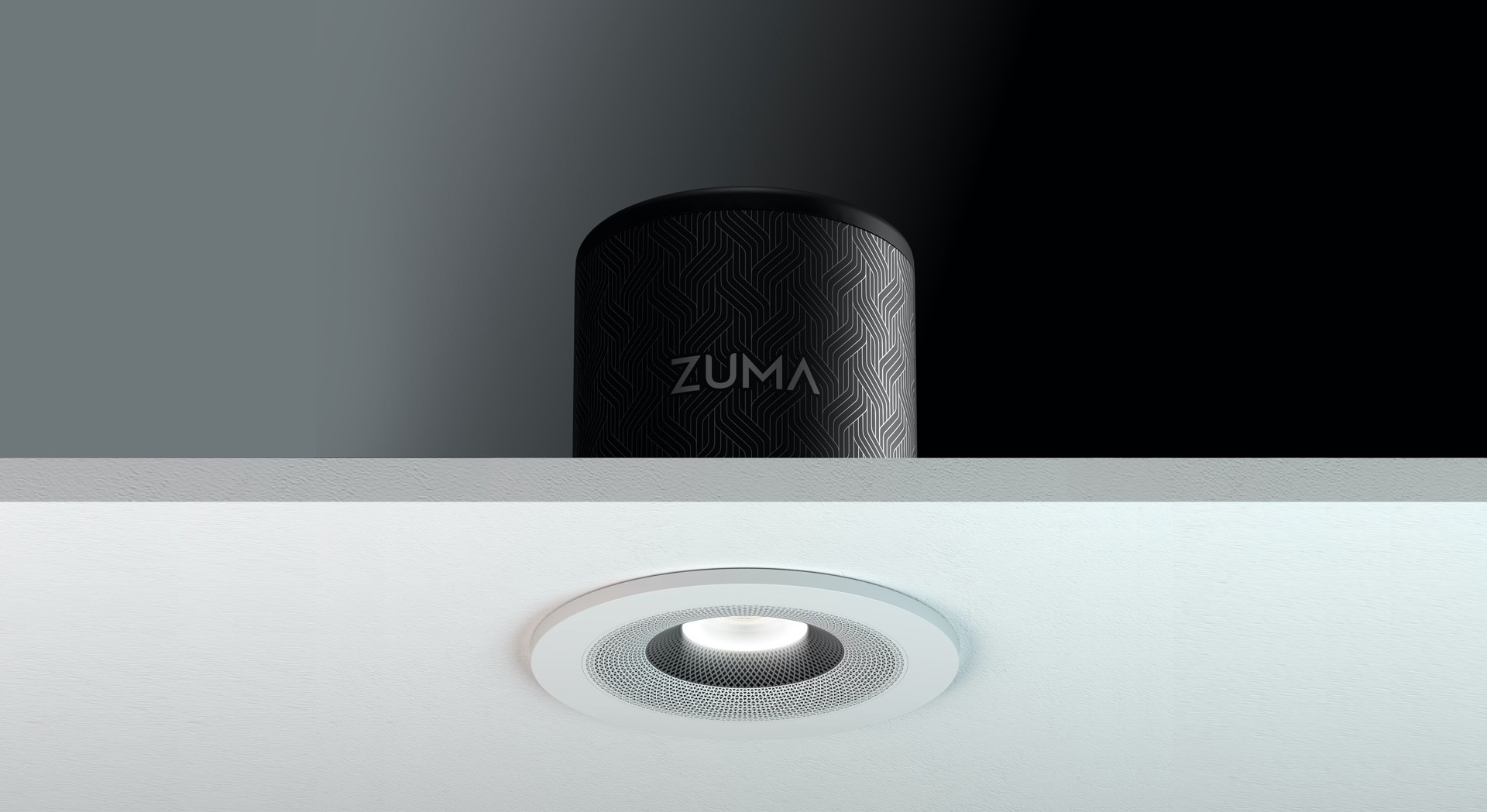
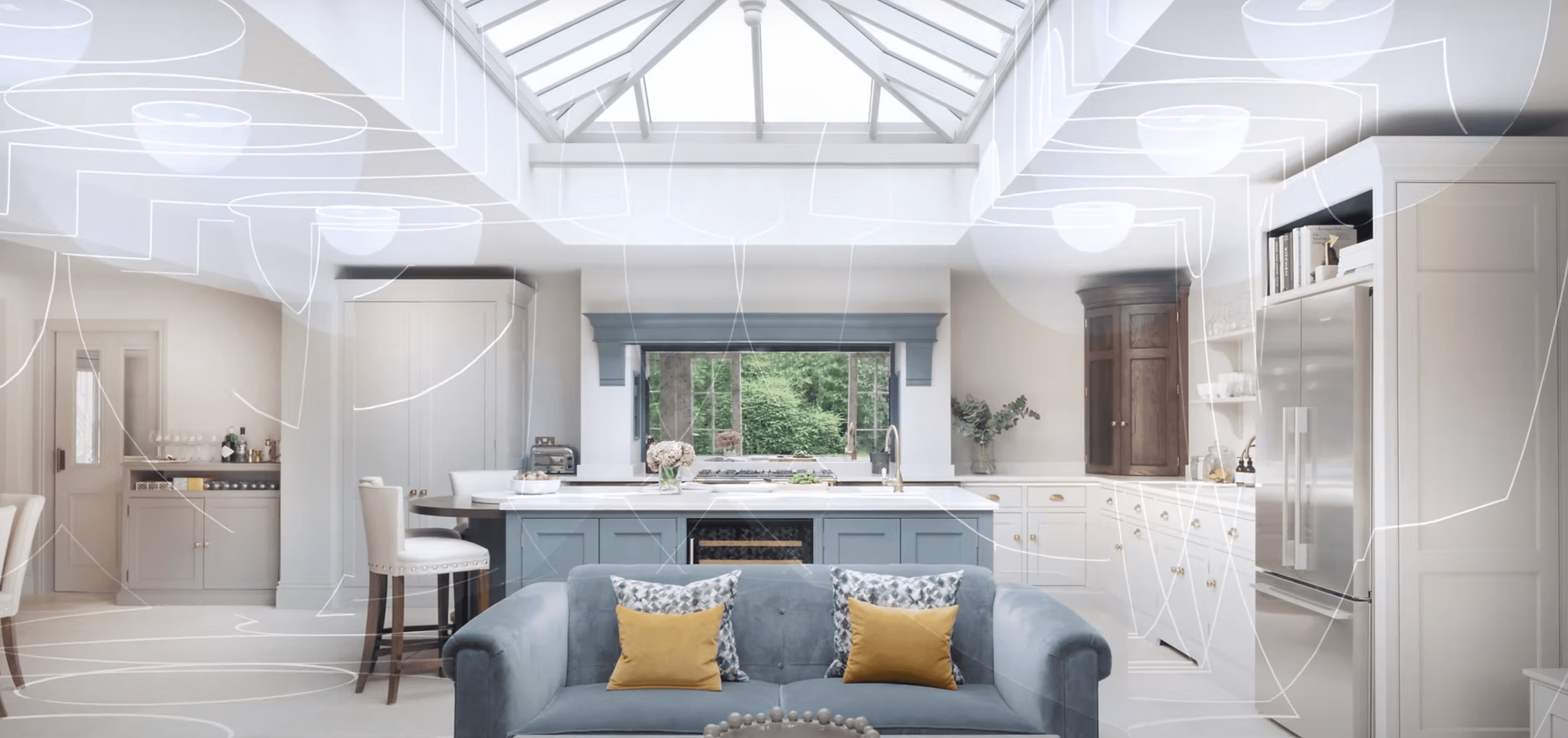
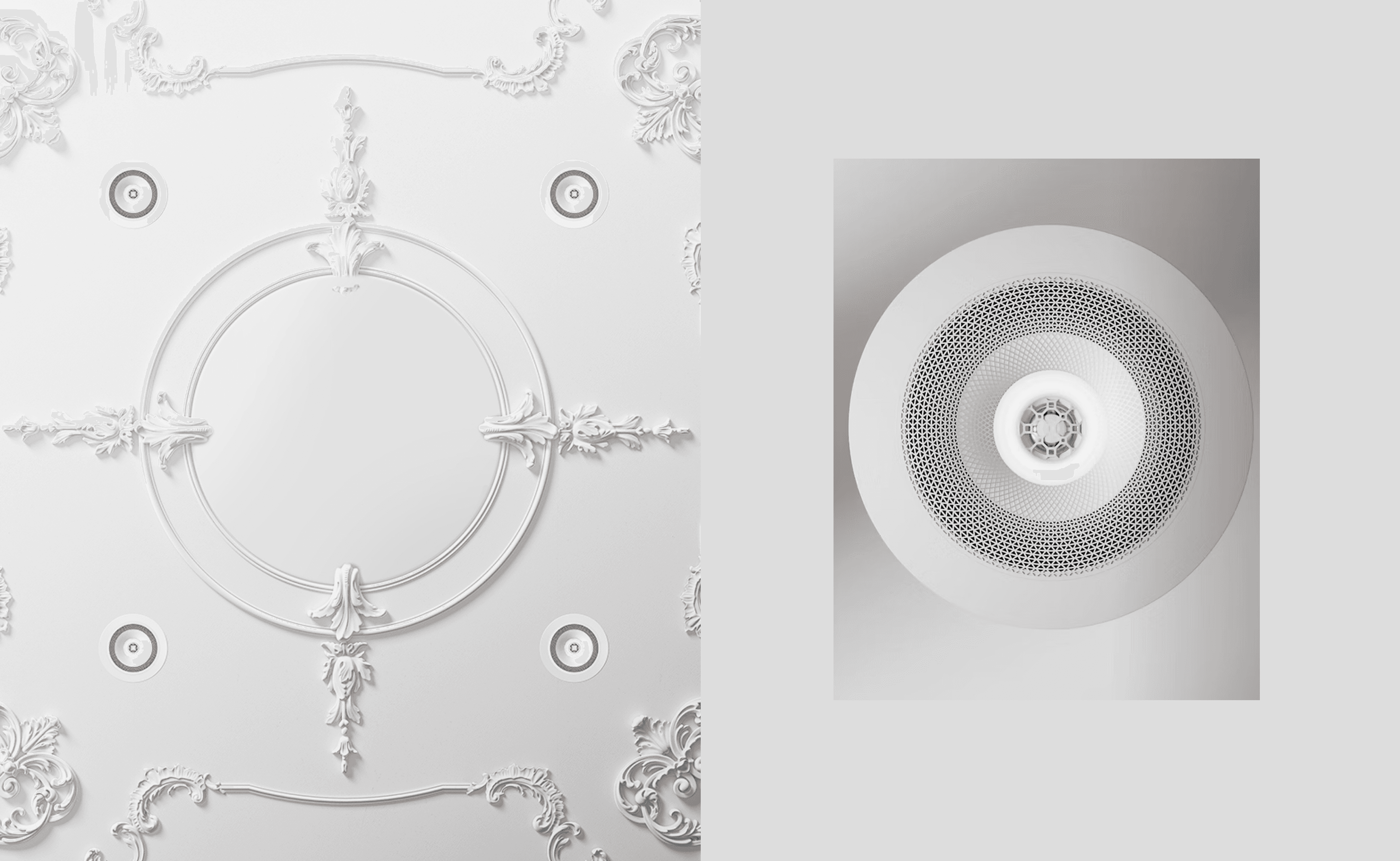
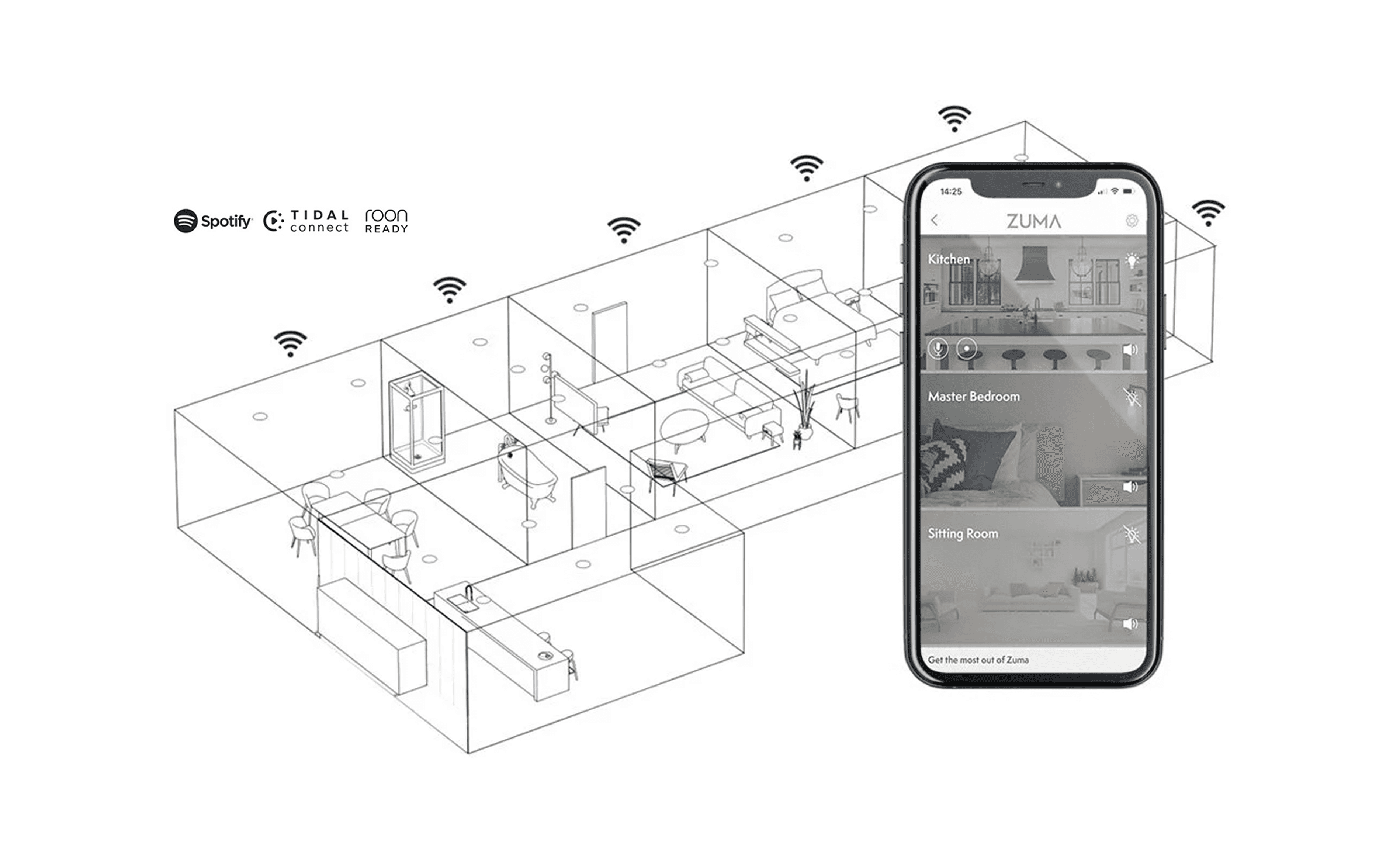
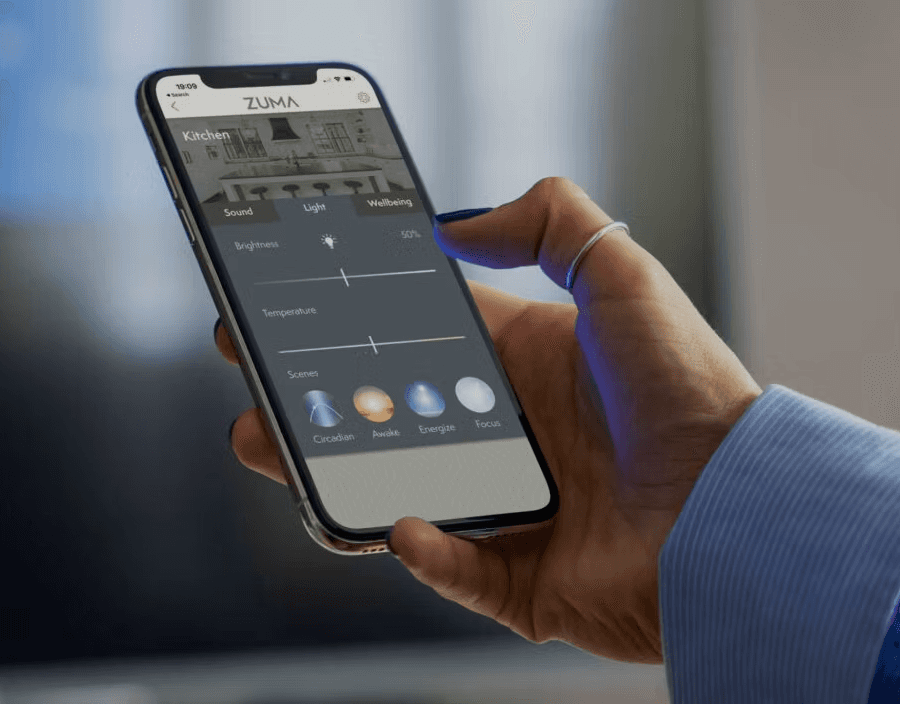
Zuma is a recessed sound-and-light system that seamlessly integrates premium-quality audio and lighting, powered by Alexa and compatible with Spotify, YouTube, and Tidal. Designed as a luxury product built to last, it’s upgradeable with smart bezels in a range of styles to evolve with any interior.
2020-21
Luxury lighting, Smart Home, IoT
1 UI, 1 UX, 5 Engineers, 1 Business Director
scope
When I joined, a small team of engineers was building the lighting system software and a bare-bones web app for installers to input first-time Wi-Fi and set up data. None had experience with consumer products or intuitive UX.
driving UX for a 0-1 startup product
The product had clear positioning but it was still raw, without UXR or design workflow in place to carry it through launch
mapping user journeys for homeowners and retailers of lighting supplies
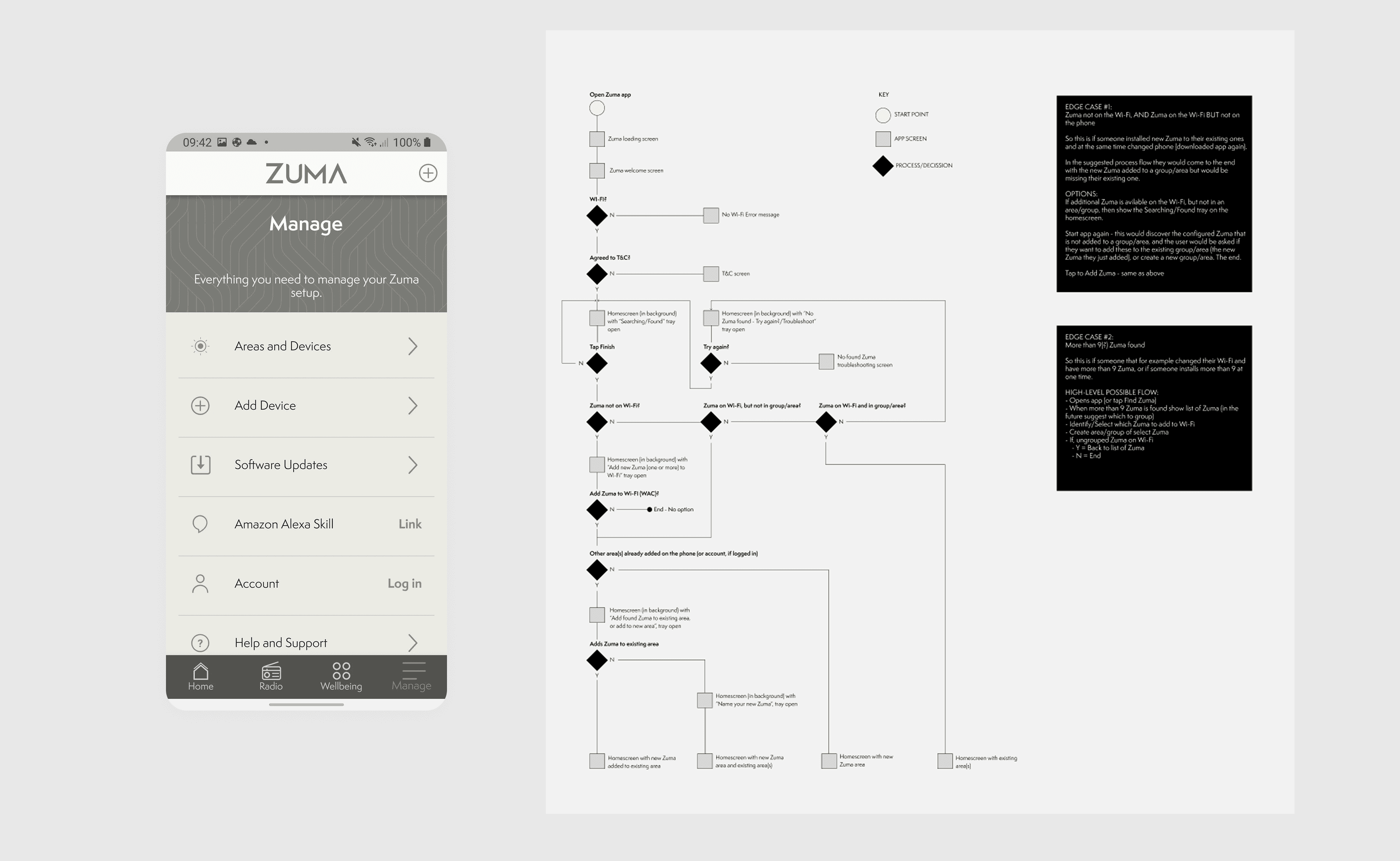
To kick start I audited all research produced during R&D, conducted a competitive review of leading market players, and charted the onboarding journeys for both lighting installers and property owners, our two key target users.
Installing the hardware units without WIFI and onboarding to connect to household network were two main paint points to clear leading to launch.
Onboarding was complex, involving multiple steps: setting up the hardware, connecting to Amazon Alexa, pairing with the local Wi-Fi, assigning different downlights to different rooms, and linking to a Spotify account or a database of radio channels.
A wide range of scenarios, error states, and user-facing copy made this journey account for roughly 90% of the overall Zuma app experience.
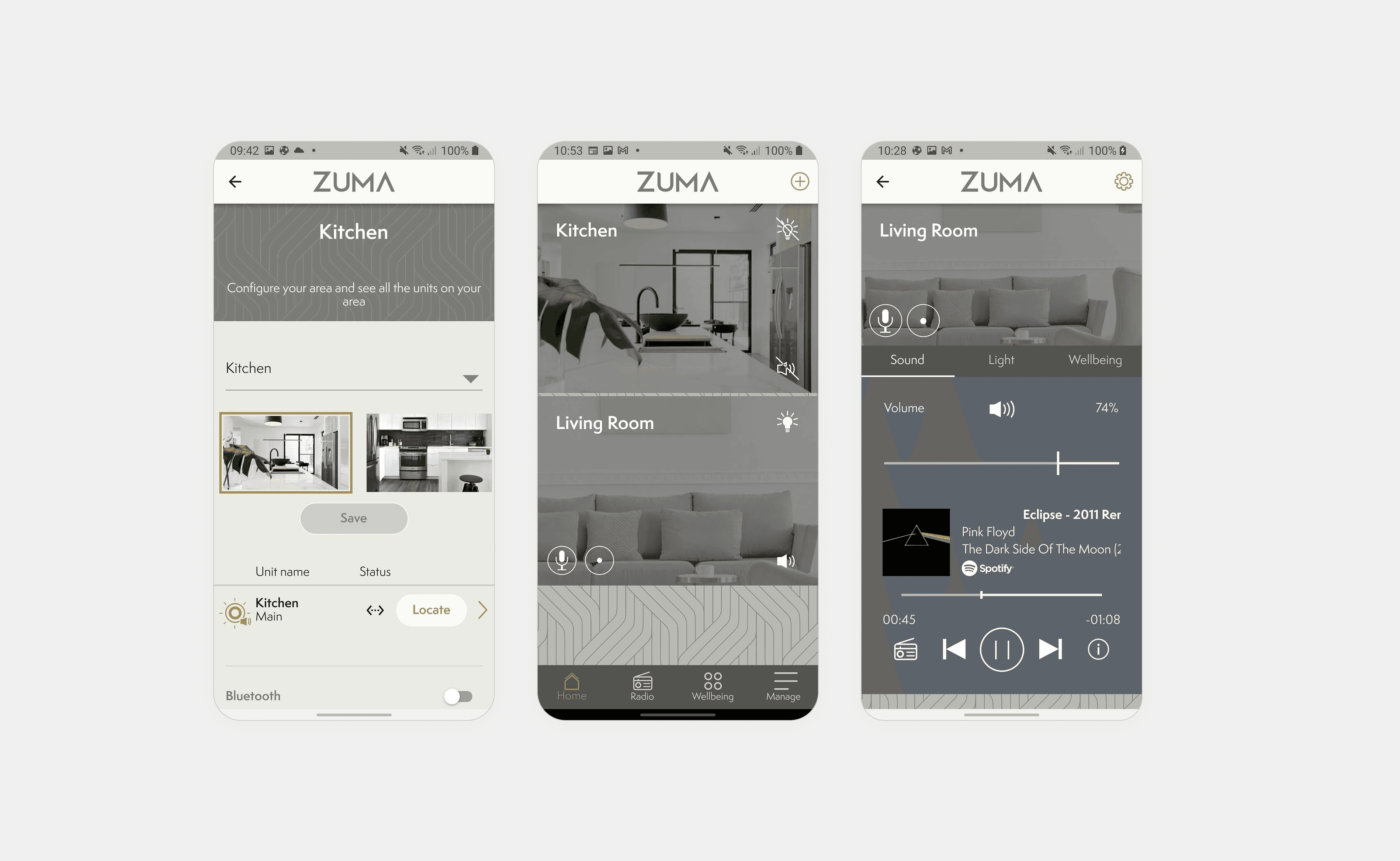
After detailed mapping, I reduced the number of steps in the flow, redesigned the app components library to match standard iOS design patterns, and ensured the flow was intuitive and friction-free.
hand in hand product, business and engineering
I designed, prototyped and tested as part of an engineering team, working on live components while the software was being developed in the background. The idea was to deliver a fluid end-to-end experience from unpacking to full up and running by setting up clear time estimates for tasks. All estimates were prioritised with the business director first, then refined with engineering and design teams.
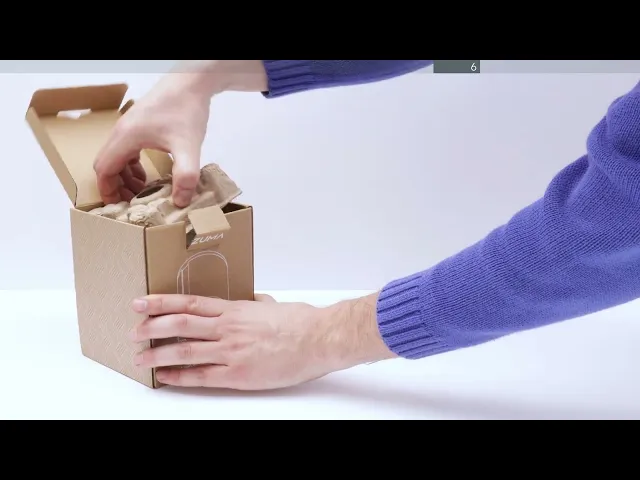
User research & journey mapping: Defined personas and mapped multiple touchpoints, from unboxing at the point of delivery to app download
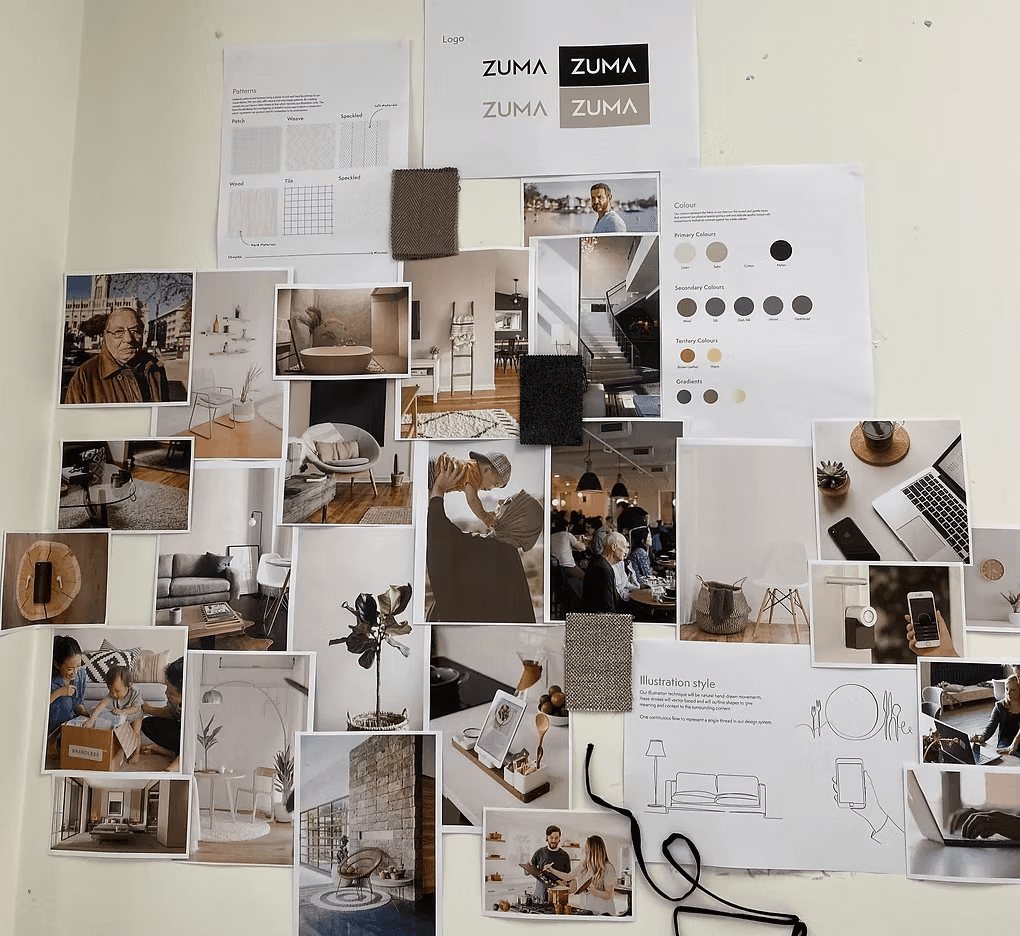
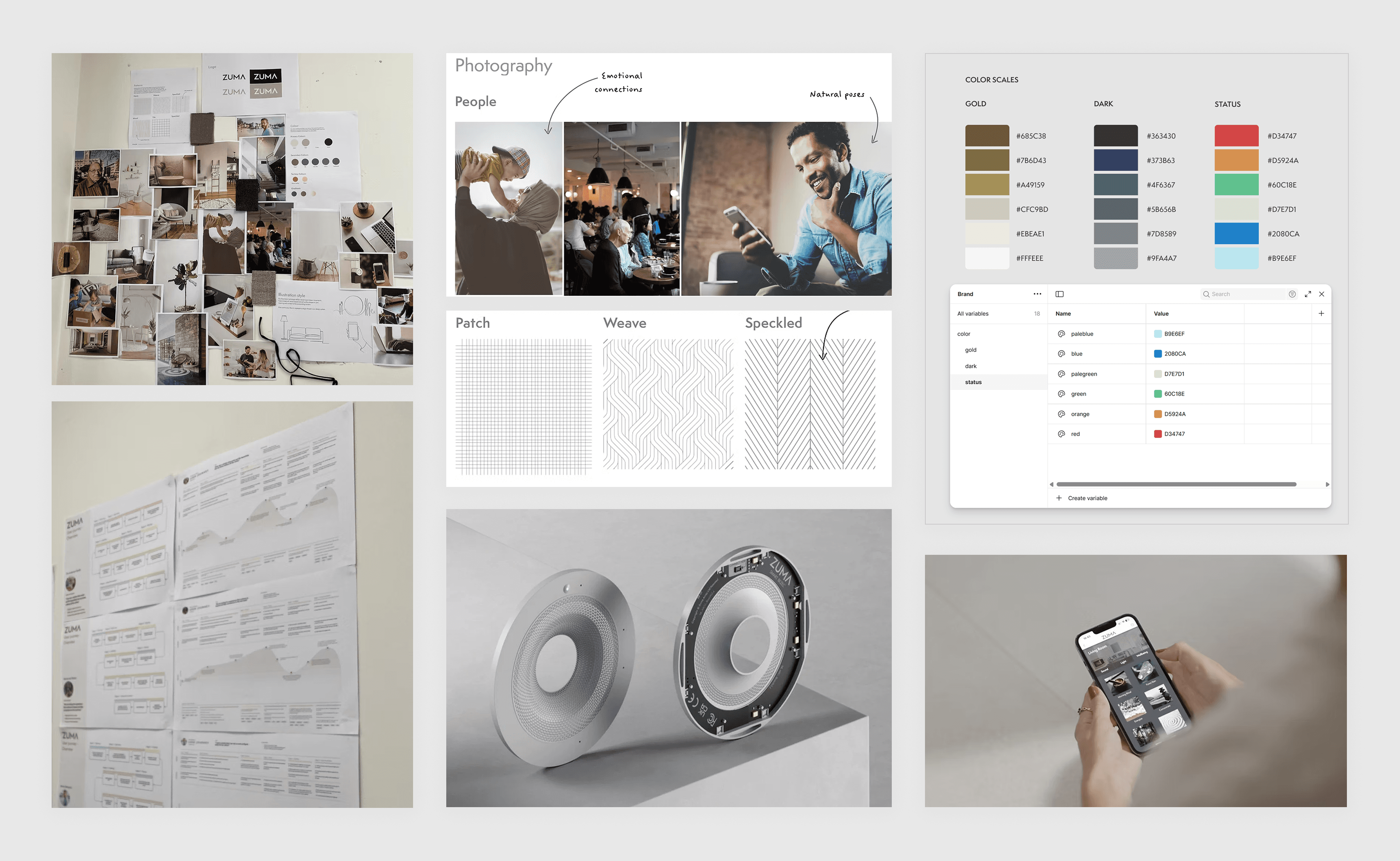
Brand integration: Extended typography, colour, and naming into a cohesive UI system.
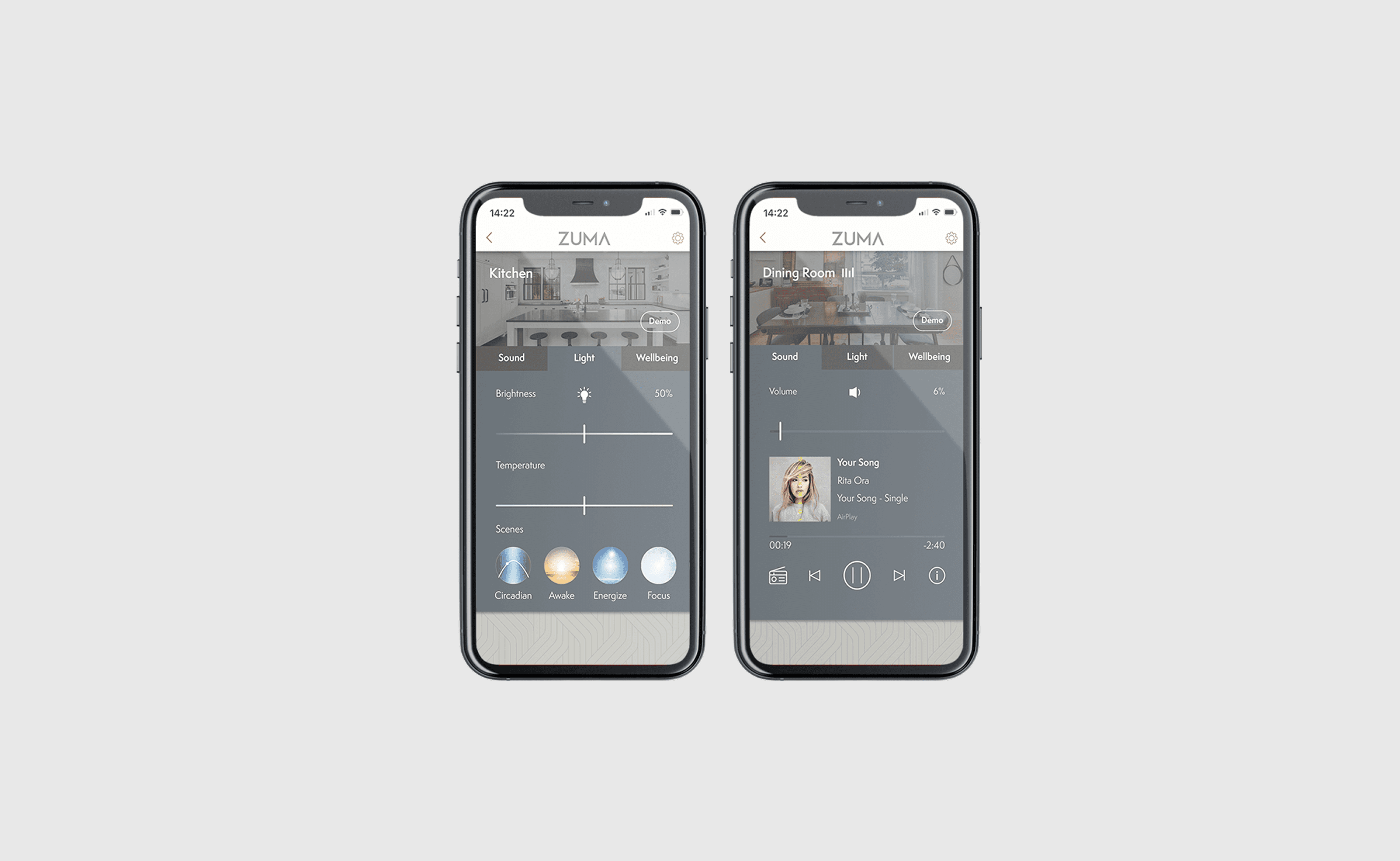
Interaction design: Crafted subtle, responsive flows for quick adjustments and clear feedback.
Benchmarked competitors’ onboarding and voice interaction patterns
Collaborated with product, engineering, and business on sprint-based priorities Built and evolved a Figma design system for fast iteration
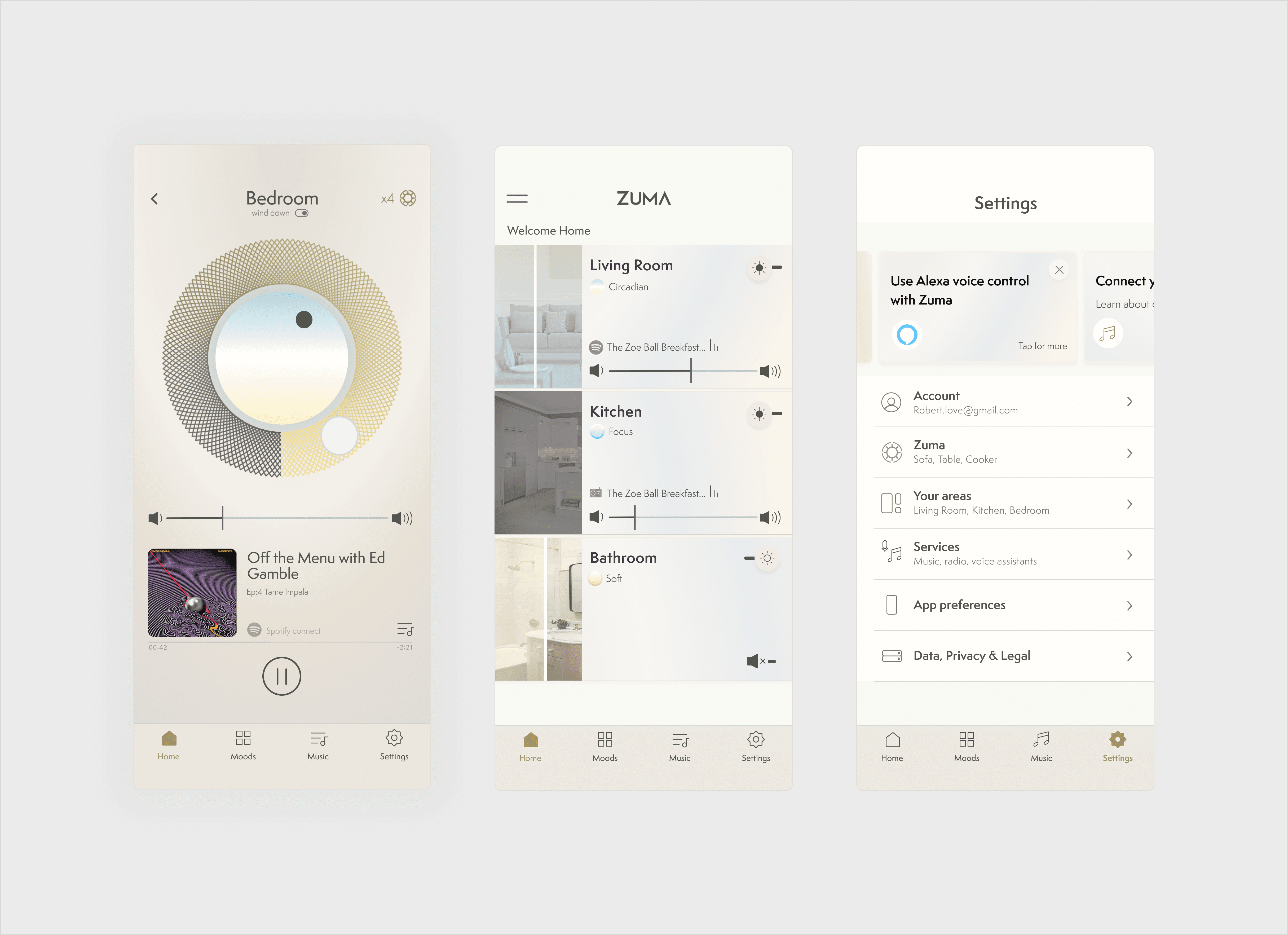
easy to setup light and sound that connects to Spotify and Amazon Alexa
Onboarding was reduced from 14 to 9 steps, all friction points were removed, while giving users the option to connect to their favorite music streaming profiles or simply tune into their radio stations straight from the app.
To launch this 0-1 product, my role involved:
UX Strategy & Content Architecture – Defined product vision/MVP, S.M.A.R.T. goals, sprint-based roadmap, product backlog in JIRA with refined epics and user stories; copy for website and support channels (e.g., Zendesk).
Creative Collaboration – Facilitated tailored workshops on Design Thinking, user story mapping.
Prototyping and Content Layout – process diagrams, sitemaps, low to high visuals and for web.
Testing and Validation – Continuous improvement cycles with user feedback integration; tested usability and content.
Light Documentation – Zendesk knowledge base articles, back-office support copywriting, and instructional design materials for internal teams.
easier onboarding and CX support integrated within the app led to strong B2B adoption
Retailers, architects and light installers were called in to test the product and provide insights. Their feedback was regularly integrated, and they became Zuma's strongest ambassadors.